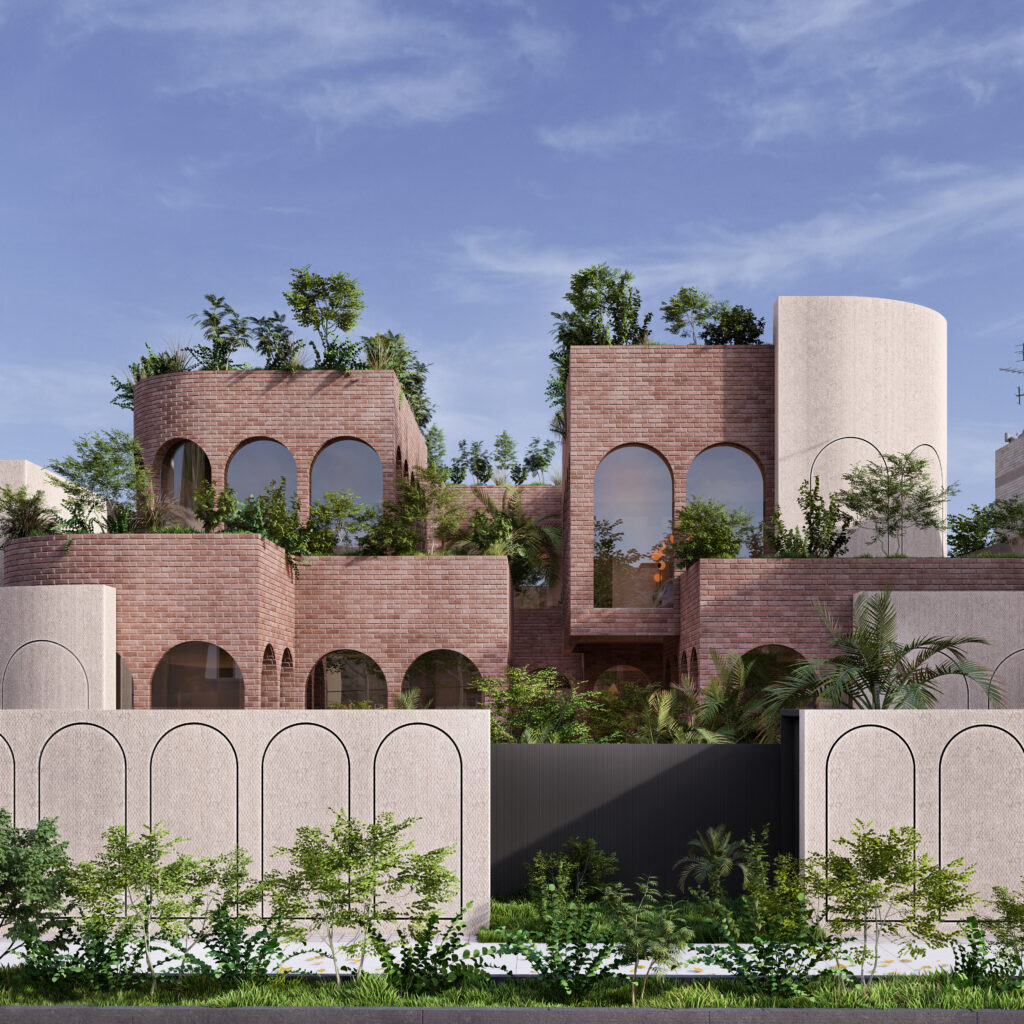
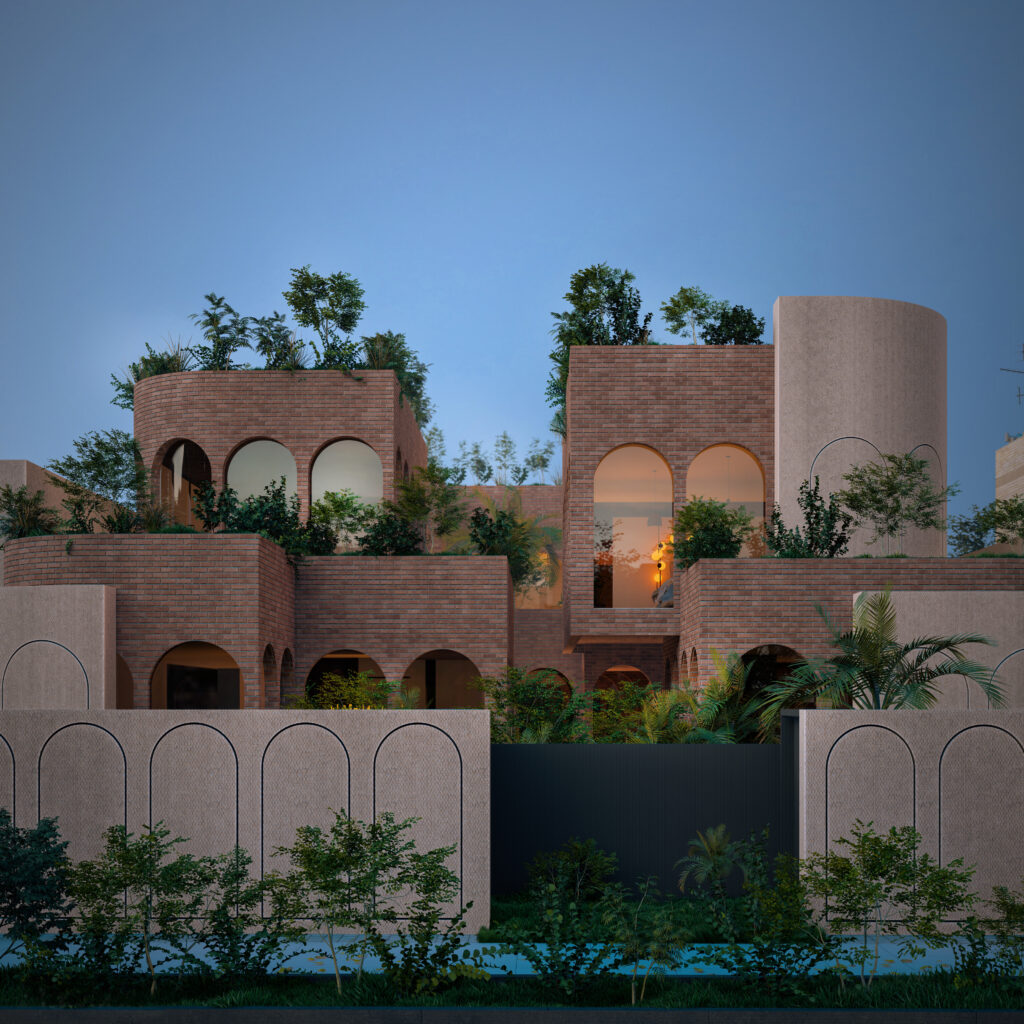
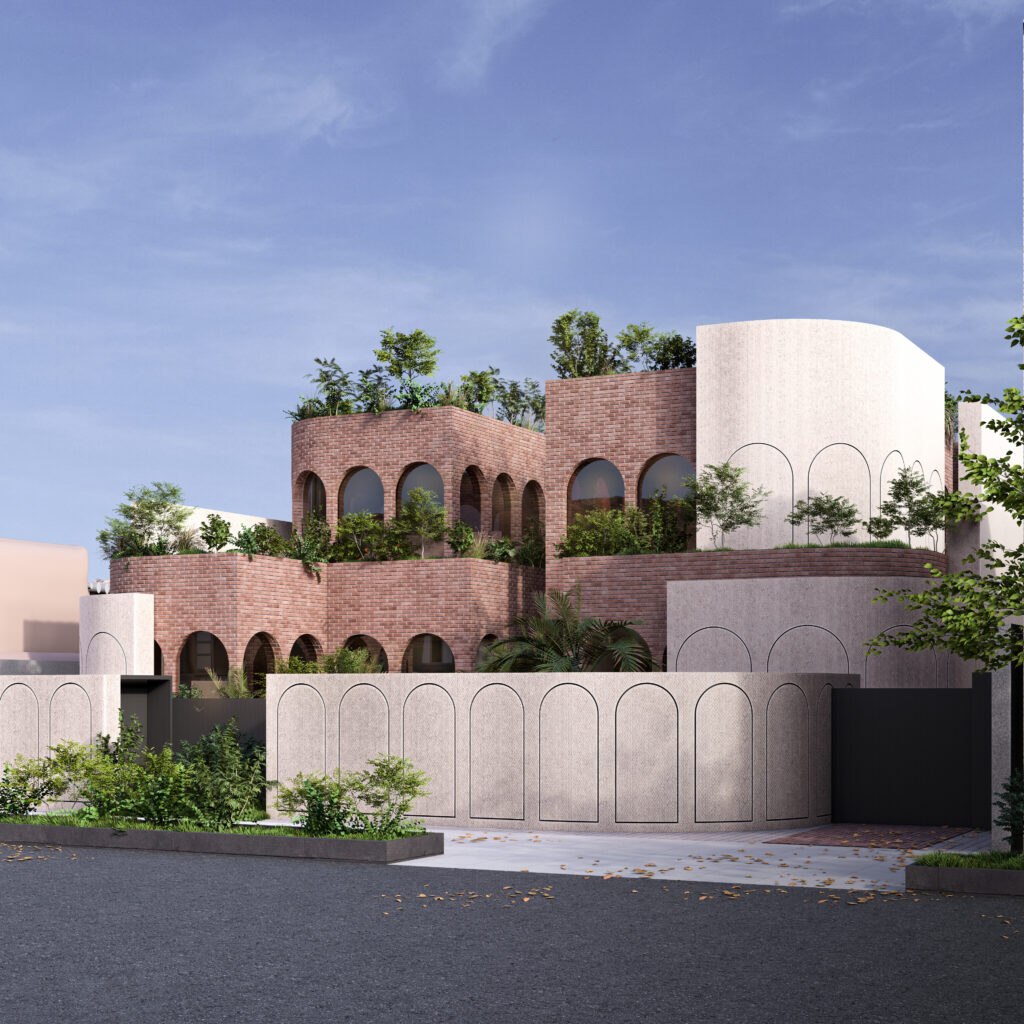
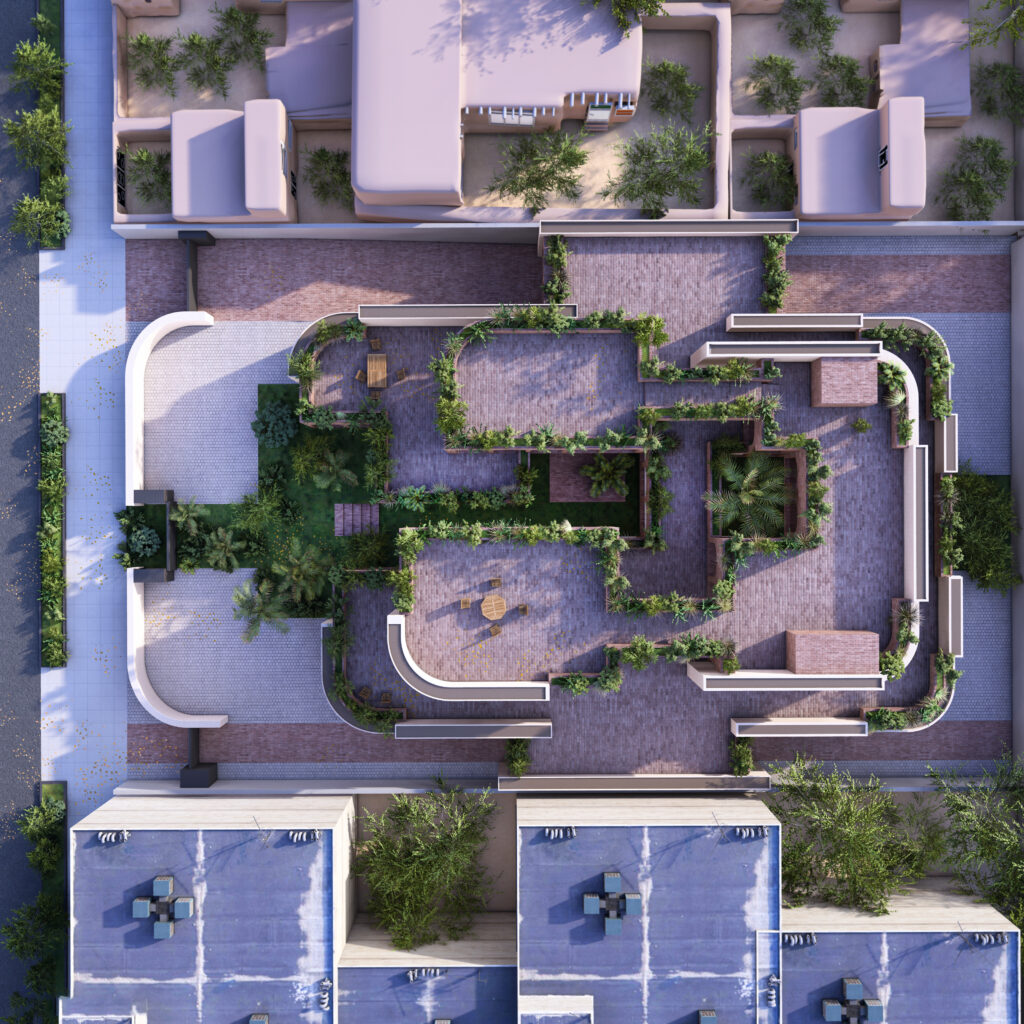
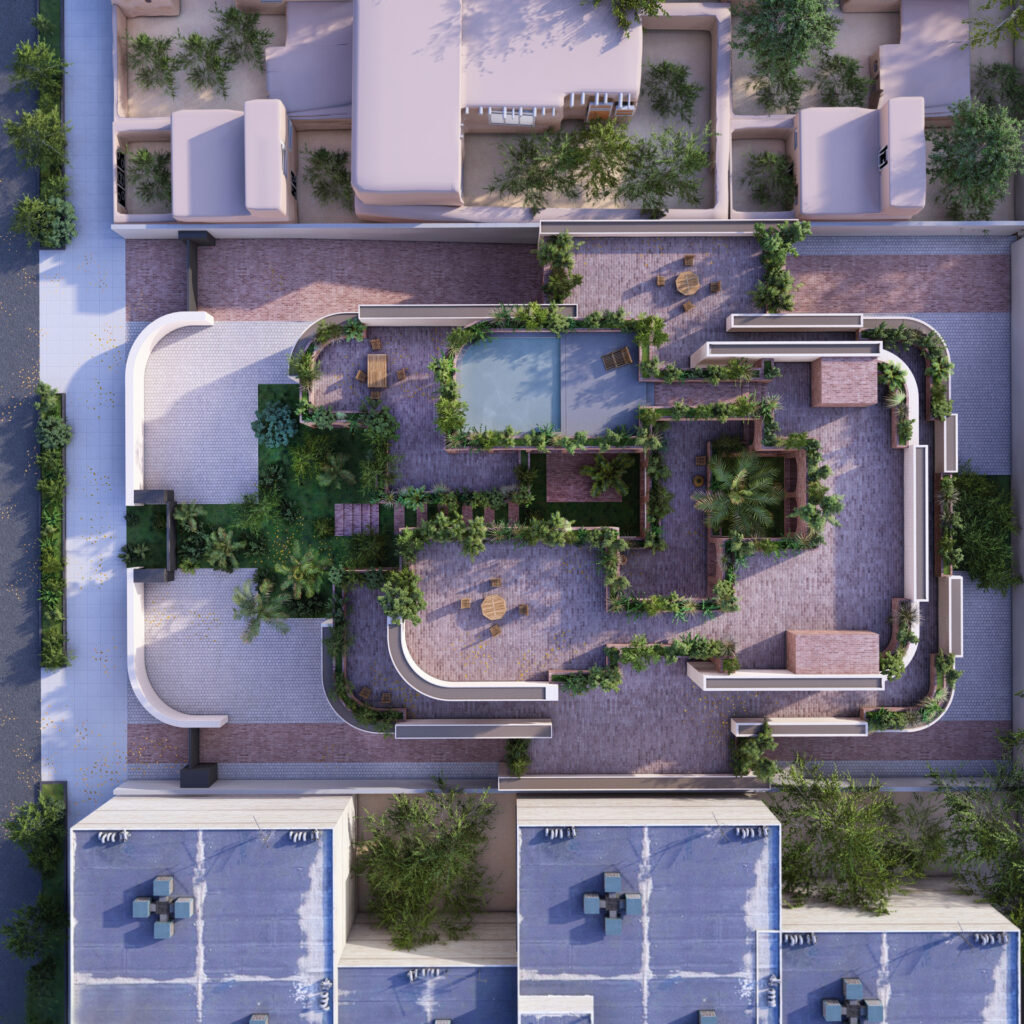
In the traditional and historic houses of Isfahan, the connection between the city and the residents is often diminished. Beyond climatic, cultural, and religious factors, there is a rationale behind this architectural design. Considering the shifts in culture, how is the lifestyle of people in Isfahan evolving? How does modern life in Isfahan influence both the house and the city?
Najafiha House aims to establish a common dialogue with the city, a dialogue that emerges from life, an extension of existence found among the arches, within the courtyard, and throughout the garden.
In Najafiha House, life begins within the arches. The expansive view draws the green courtyard of the house inward, creating a central space that serves as a bridge between the interior and the exterior, marking the start of a connection. In Najafiha House, the boundaries of rigid walls dissolve, perhaps to foster a conversation between the house and the city. Najafiha House whispers of a yearning for reconnection, a counterpoint to the isolating trends of modern Isfahanian living. Where once inward-facing courtyards served as protection and a sanctuary from the bustle, now, perhaps, they can serve as an invitation. A beckoning hand extended to a city grappling with new rhythms.